Ten guardrail-checked lessons with audio. Deep enough to change how you read a verse, short enough to finish on your commute.
IncludedContext-first studyYours to keep
Listen and Learn
Ten short lessons, each built the same way: one Greek word, one verse in its real context, one theological payoff, one guardrail against the bad word study you've probably already heard, and a short audio devotional so the lesson can ride along with your day. None of them requires a desk. All of them end in worship.
Audio Lessons
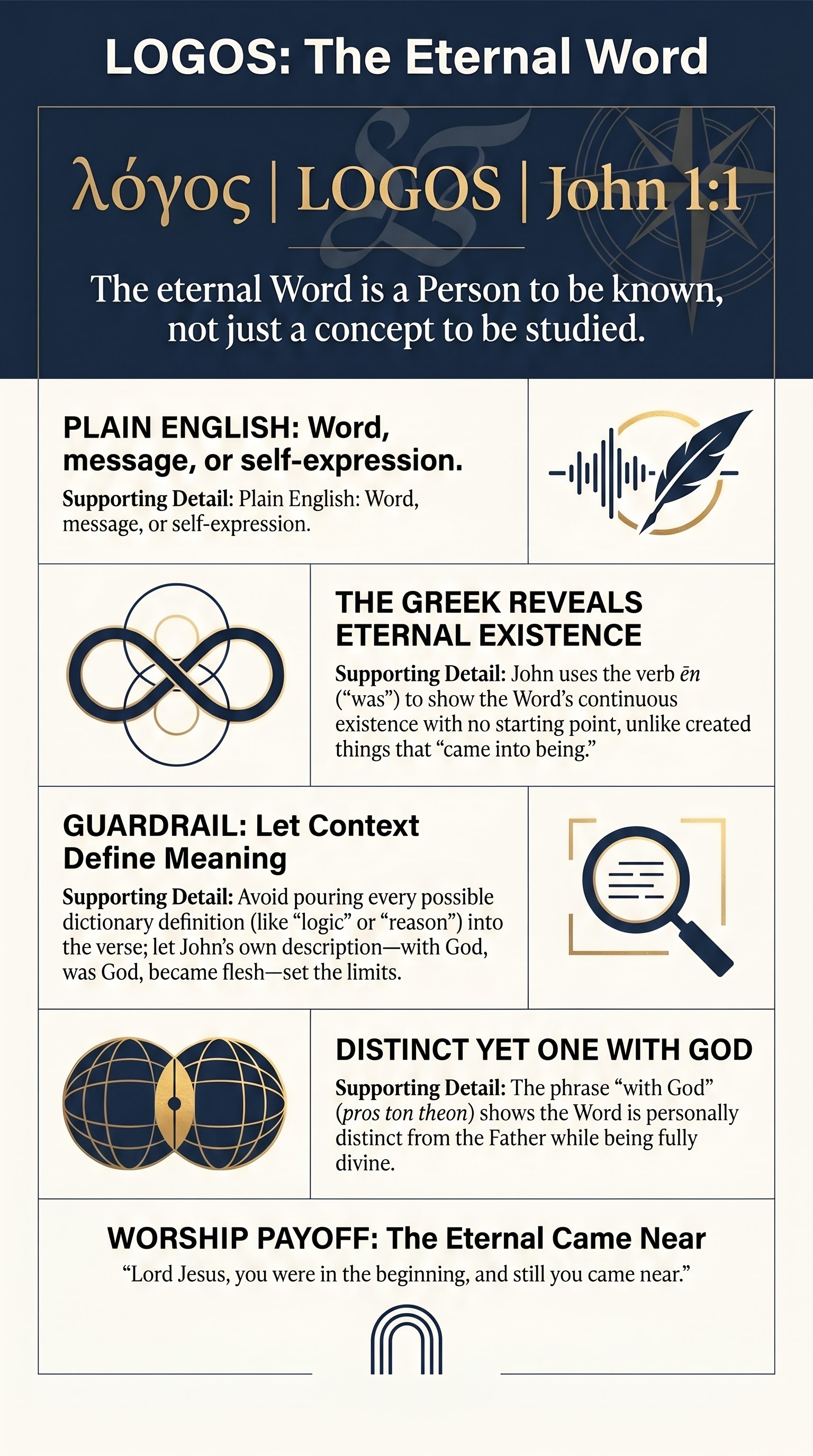
John 1:1 · guardrail-checked
Logos: The Word Who Was With God
λόγος
logos · Word / message / self-expression
John's prologue uses logos to show that the Son is not a vague spiritual idea, but the eternal Word who is with God, is God, and became flesh.
Guardrail: Do not make logos mean every possible idea at once. Let John's context define the payoff.
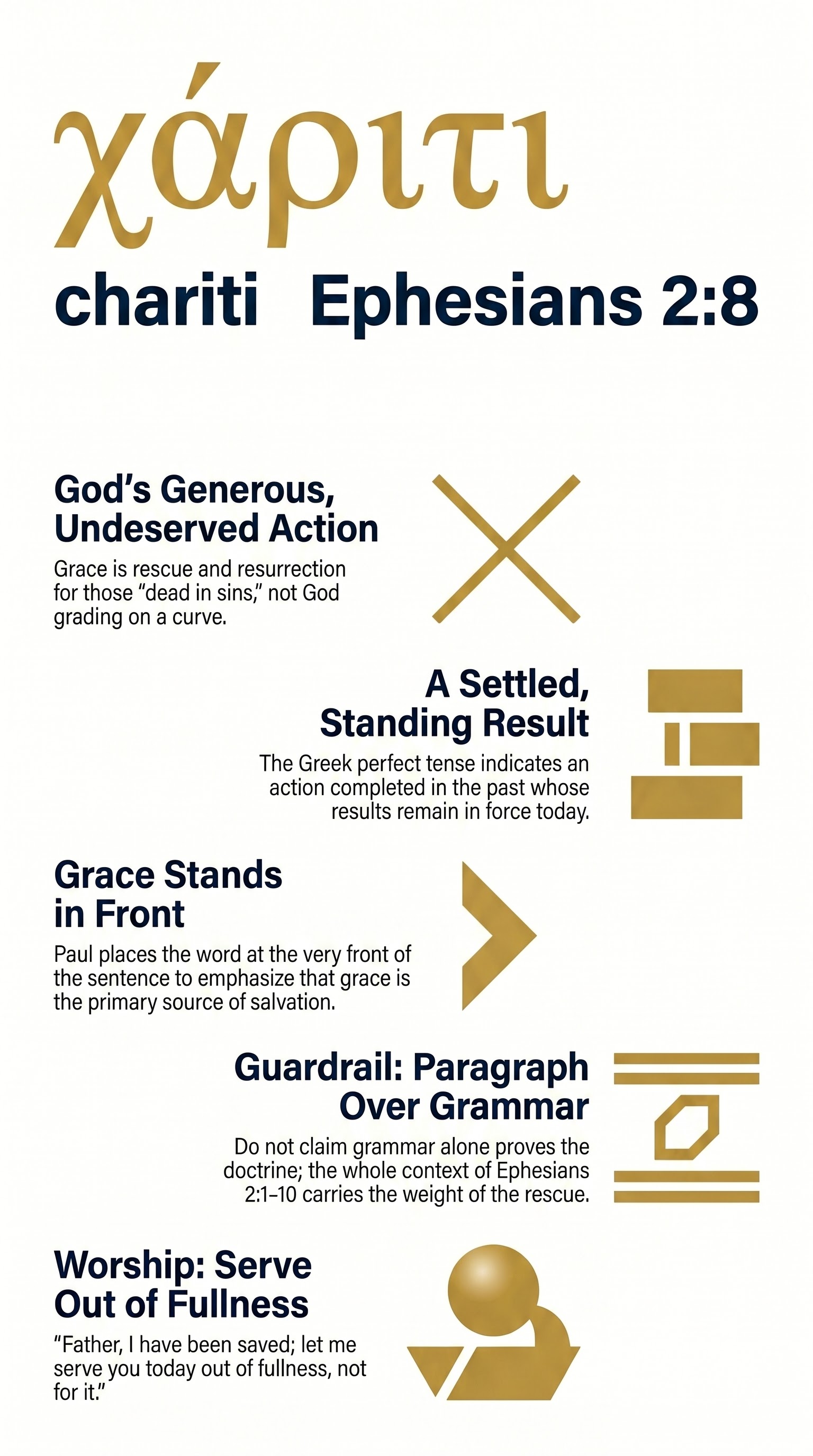
Ephesians 2:8 · guardrail-checked
Chariti: Grace In The Front Seat
χάριτι
chariti · by grace
Paul puts grace at the front of salvation so nobody mistakes rescue in Christ for religious performance.
Guardrail: Grace is not God grading on a curve. It is God's generous action in Christ.
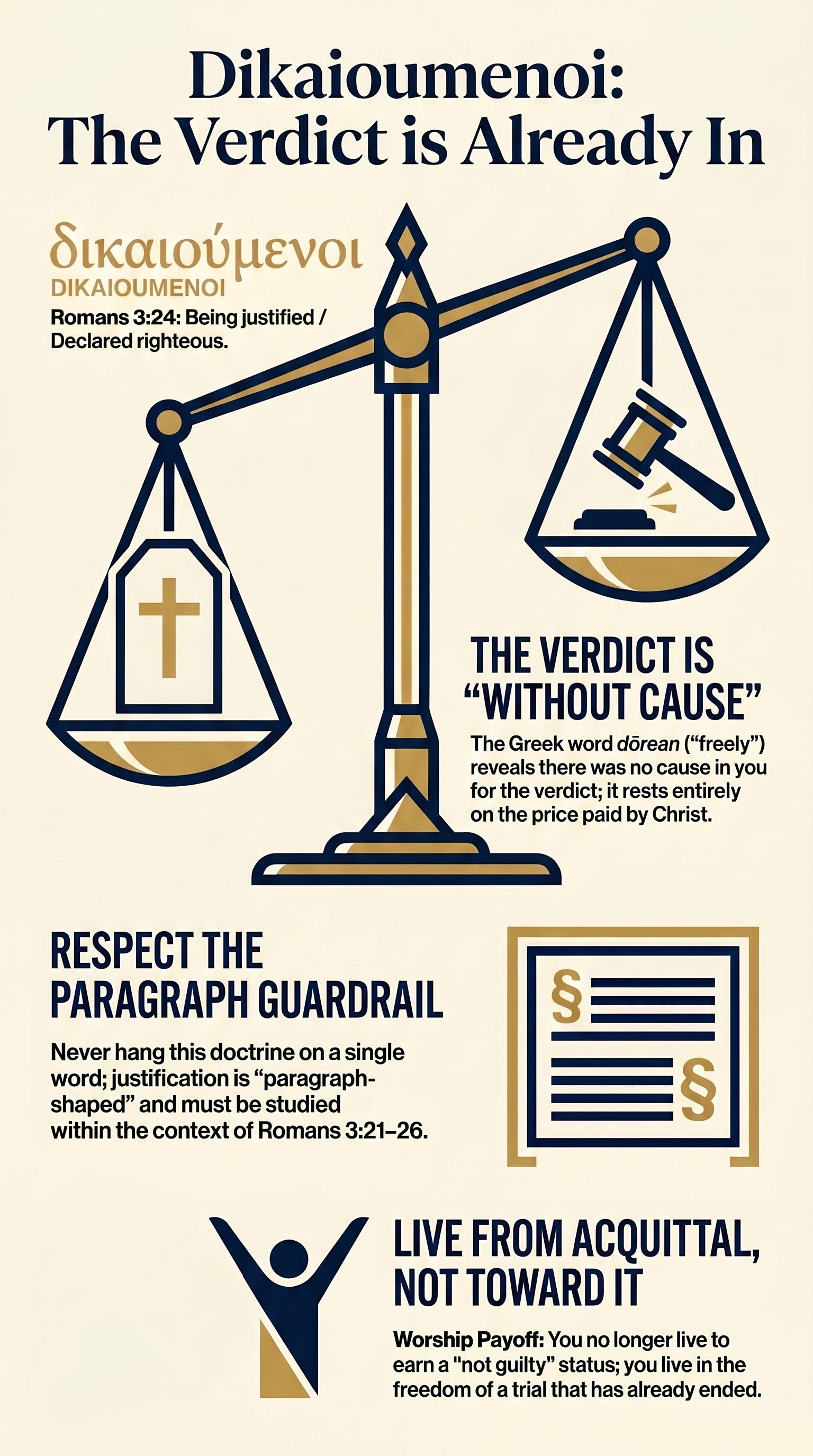
Romans 3:24 · guardrail-checked
Dikaioumenoi: Declared Righteous By Gift
δικαιούμενοι
dikaioumenoi · being justified / declared righteous
Justification is God's gracious verdict in Christ, not self-improvement with religious language around it.
Guardrail: Justification does not pretend sin never happened; it rests on redemption in Christ.
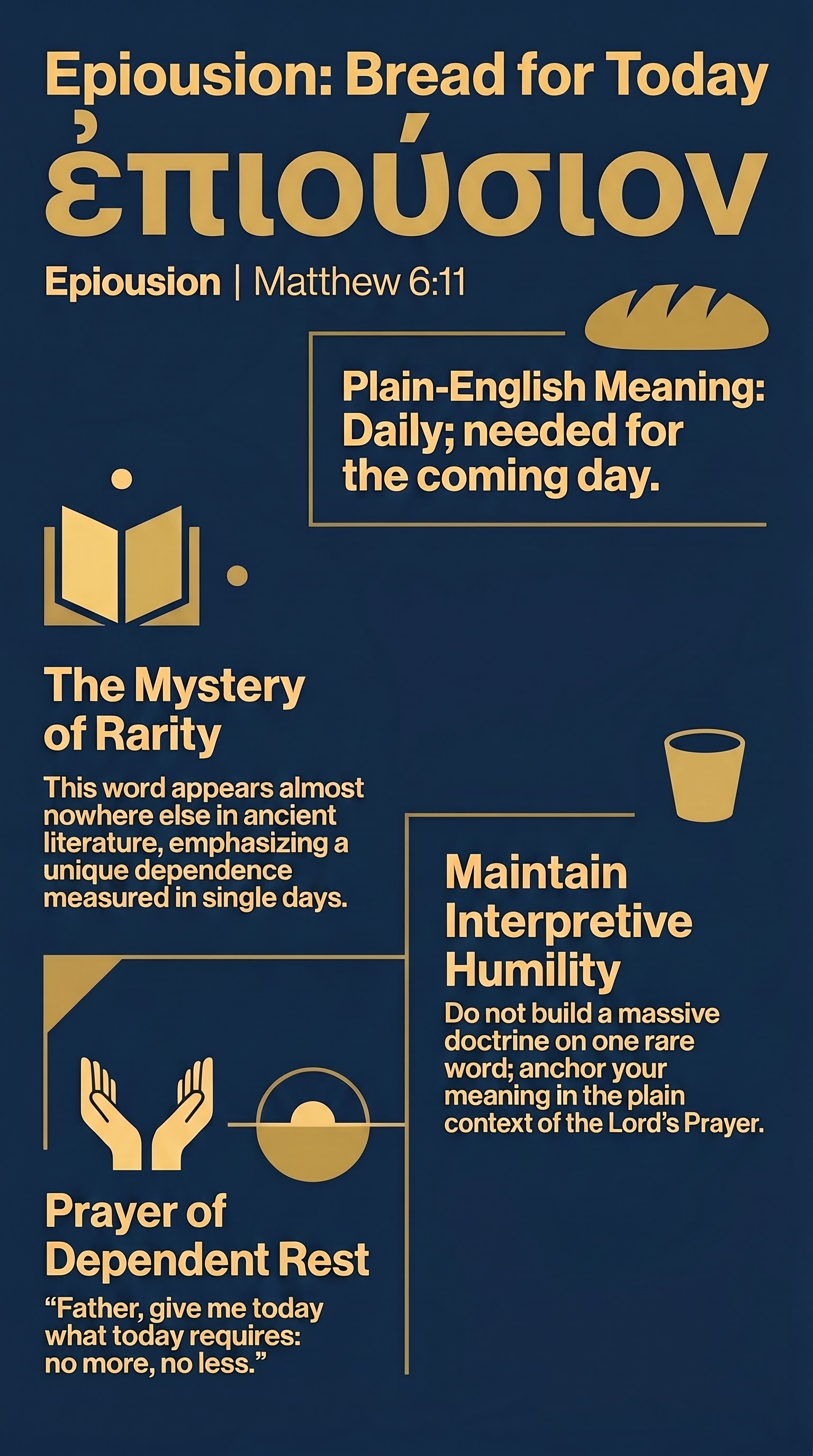
Matthew 6:11 · guardrail-checked
Epiousion: Bread For Today
ἐπιούσιον
epiousion · daily / needed for the coming day
The rare word behind daily bread teaches humble dependence on the Father for what sustains us today.
Guardrail: Do not build a whole doctrine on the mystery of one rare word. Anchor it in the Lord's Prayer.
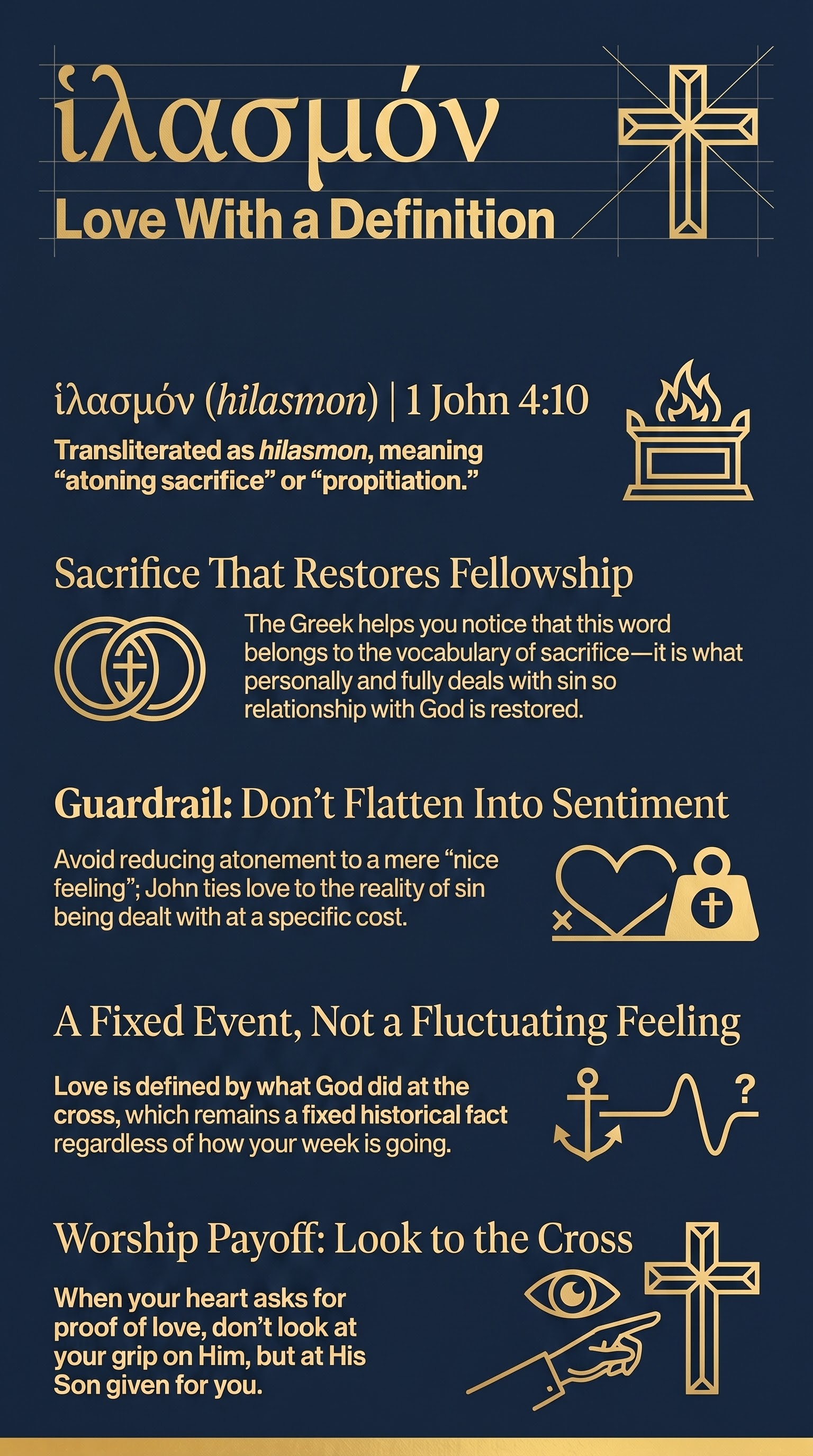
1 John 4:10 · guardrail-checked
Hilasmon: Love Defined By The Cross
ἱλασμόν
hilasmon · atoning sacrifice / propitiation
John defines love by God's action in sending the Son as the atoning sacrifice for our sins.
Guardrail: Do not flatten atonement into sentiment. John ties love to sin actually being dealt with.
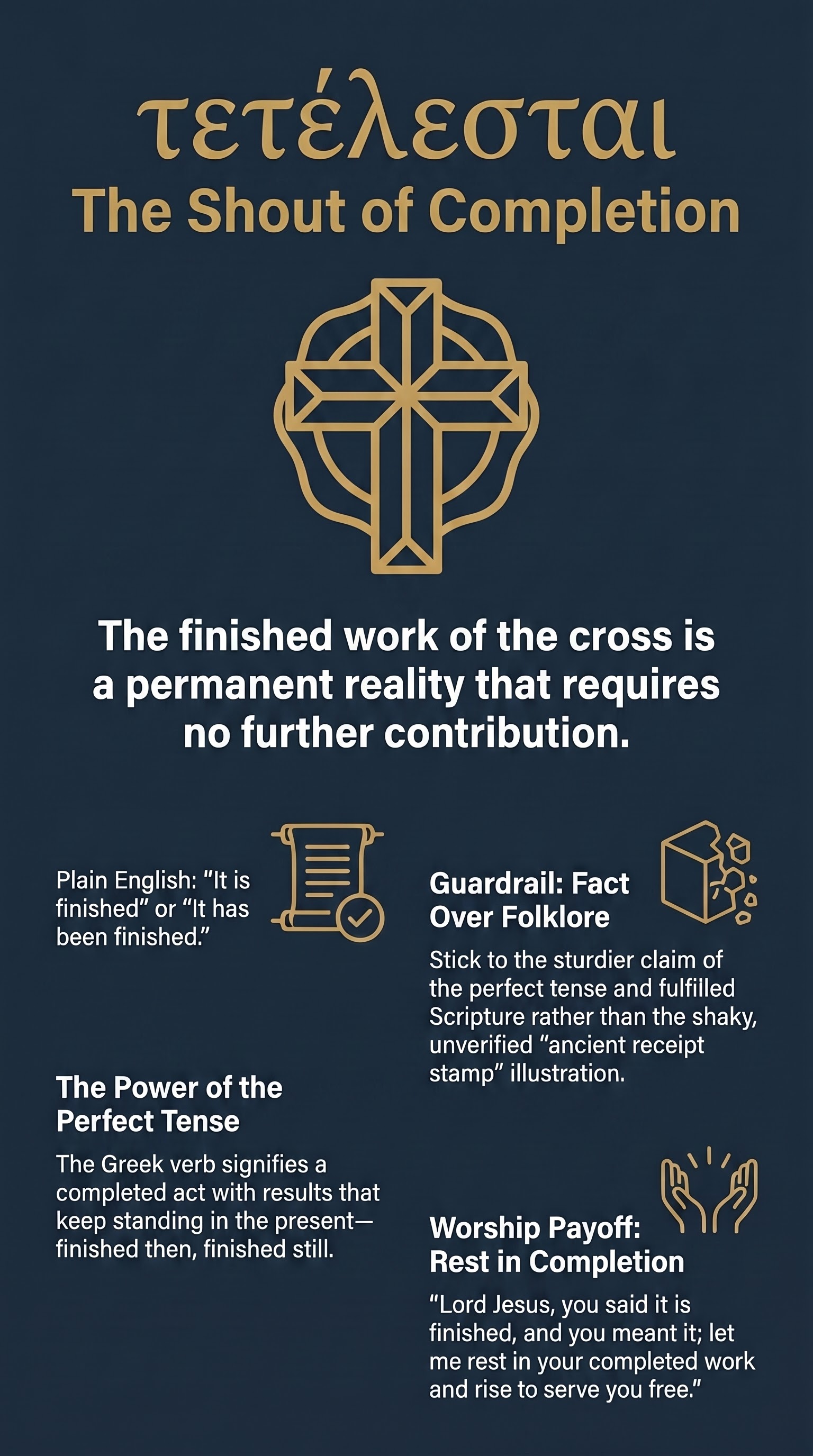
John 19:30 · guardrail-checked
Tetelestai: Finished Means Finished
τετέλεσται
tetelestai · it has been finished
Jesus' cry from the cross announces completed work with continuing significance for everyone who trusts him.
Guardrail: Do not detach the word from John's passion narrative. The context is obedience, sacrifice, and fulfillment.
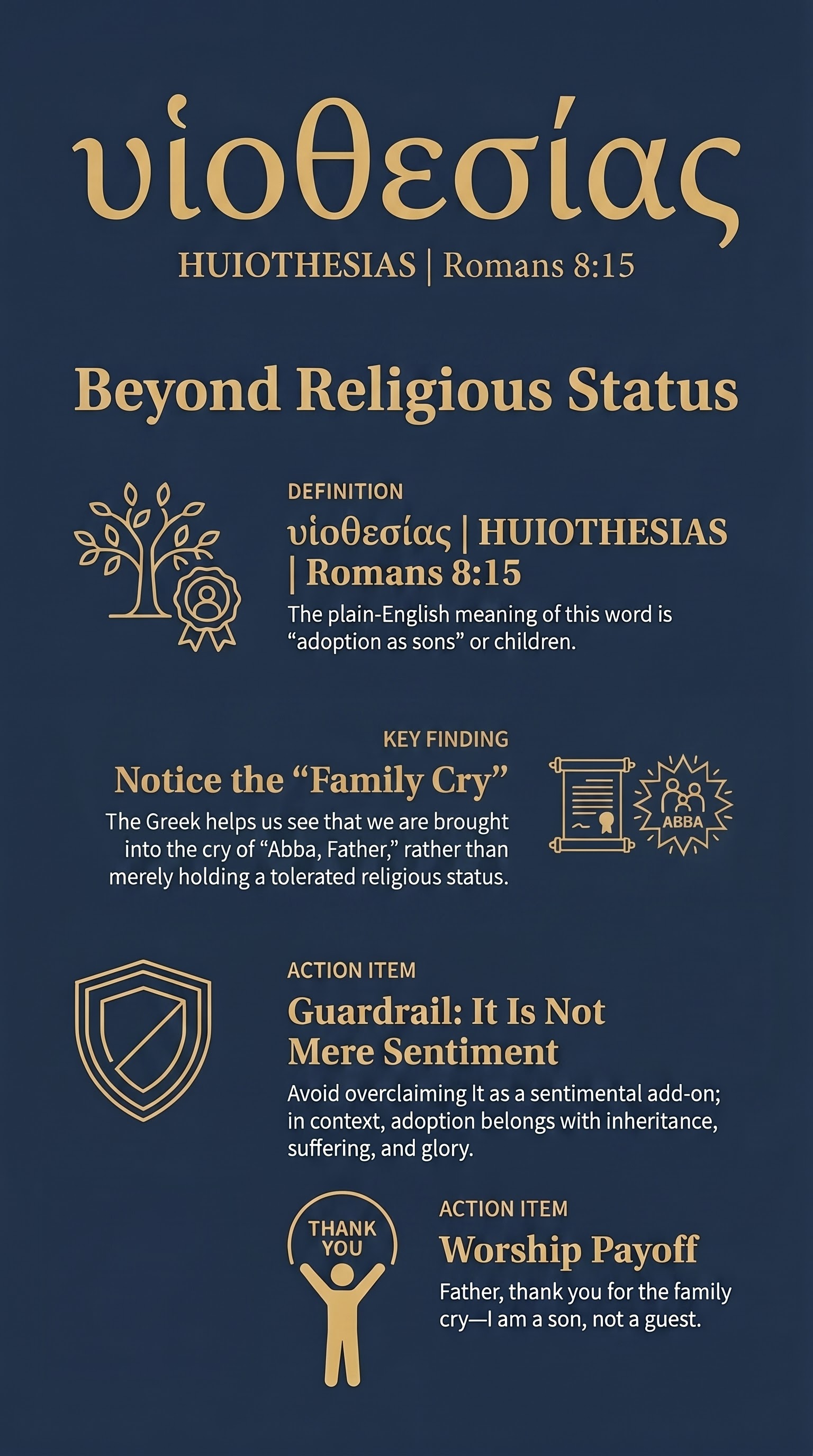
Romans 8:15 · guardrail-checked
Huiothesias: The Spirit Of Adoption
υἱοθεσίας
huiothesias · adoption as sons / children
The Spirit brings believers into the family cry of Abba, Father, not merely into tolerated religious status.
Guardrail: Adoption is not a sentimental add-on. In Romans 8 it belongs with inheritance, suffering, and glory.
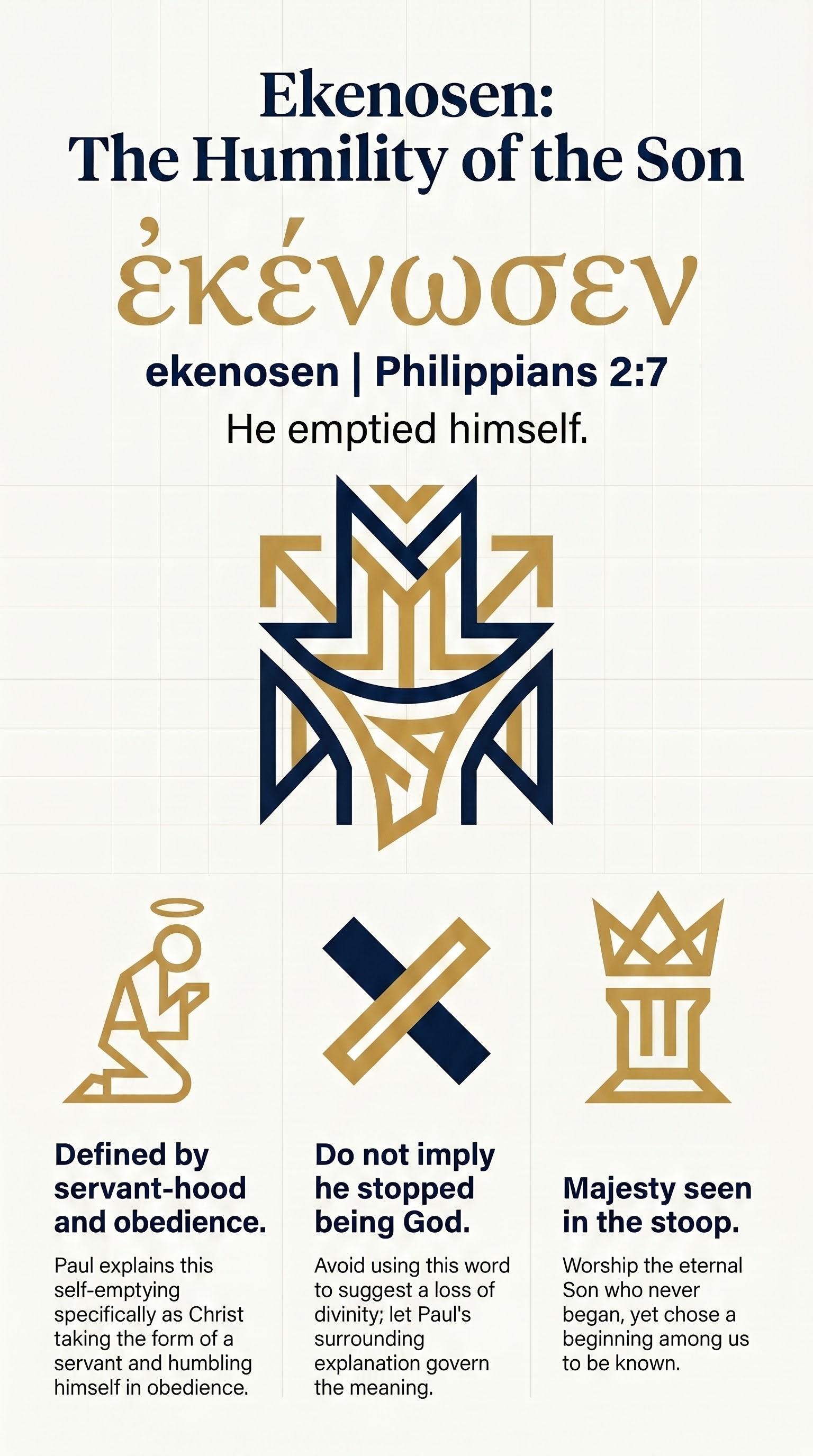
Philippians 2:7 · guardrail-checked
Ekenosen: The Humility Of The Son
ἐκένωσεν
ekenosen · he emptied himself
Paul explains Christ's self-emptying by his taking the form of a servant and humbling himself in obedience.
Guardrail: Do not use this word to imply that the Son stopped being God. Let Paul's own explanation govern the meaning.
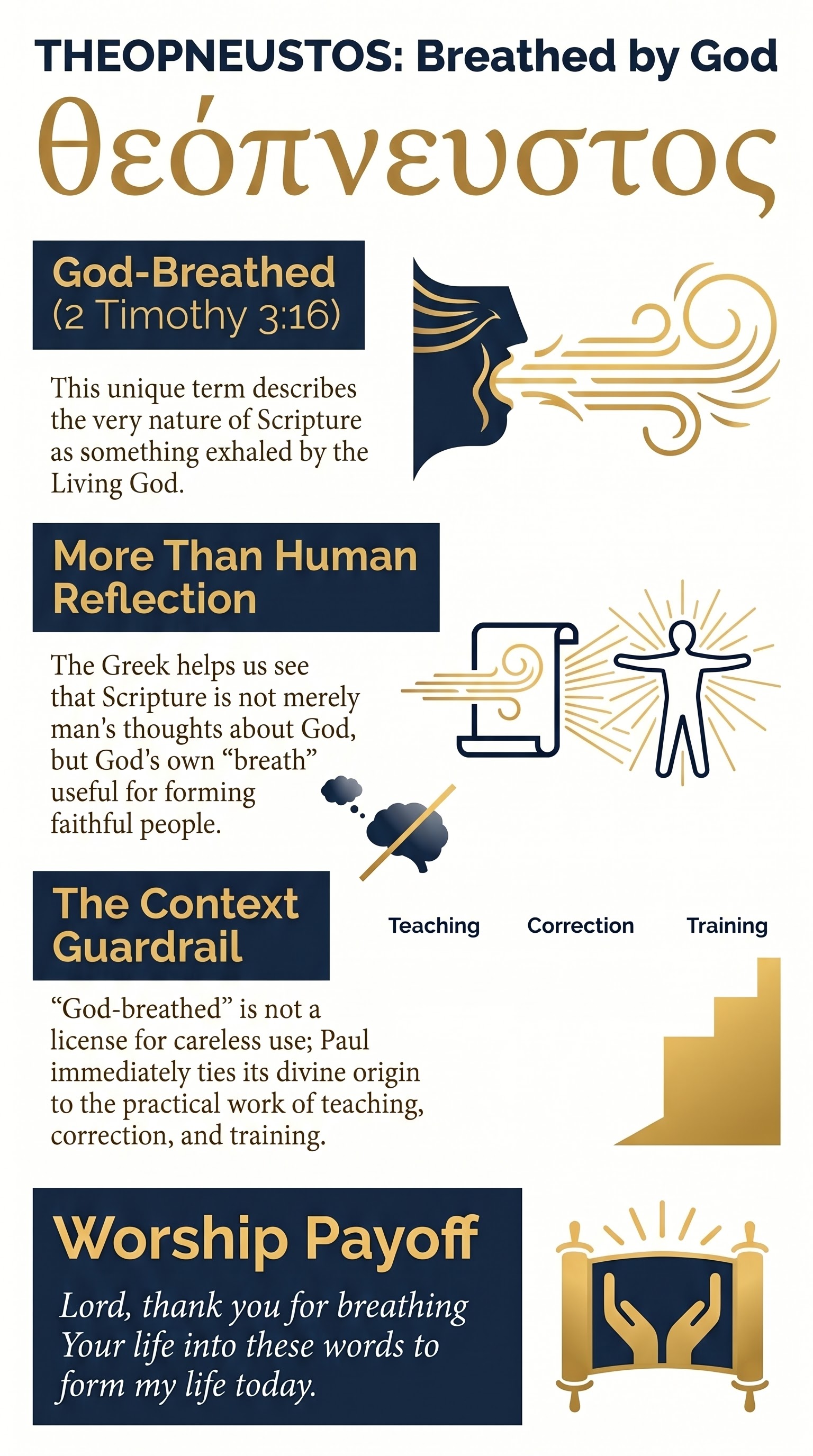
2 Timothy 3:16 · guardrail-checked
Theopneustos: Scripture Breathed Out By God
θεόπνευστος
theopneustos · God-breathed
Scripture is not merely reflection about God; Paul says it is God-breathed and useful for forming faithful people.
Guardrail: God-breathed is not permission to use the Bible carelessly. Paul ties Scripture to teaching, correction, and training.
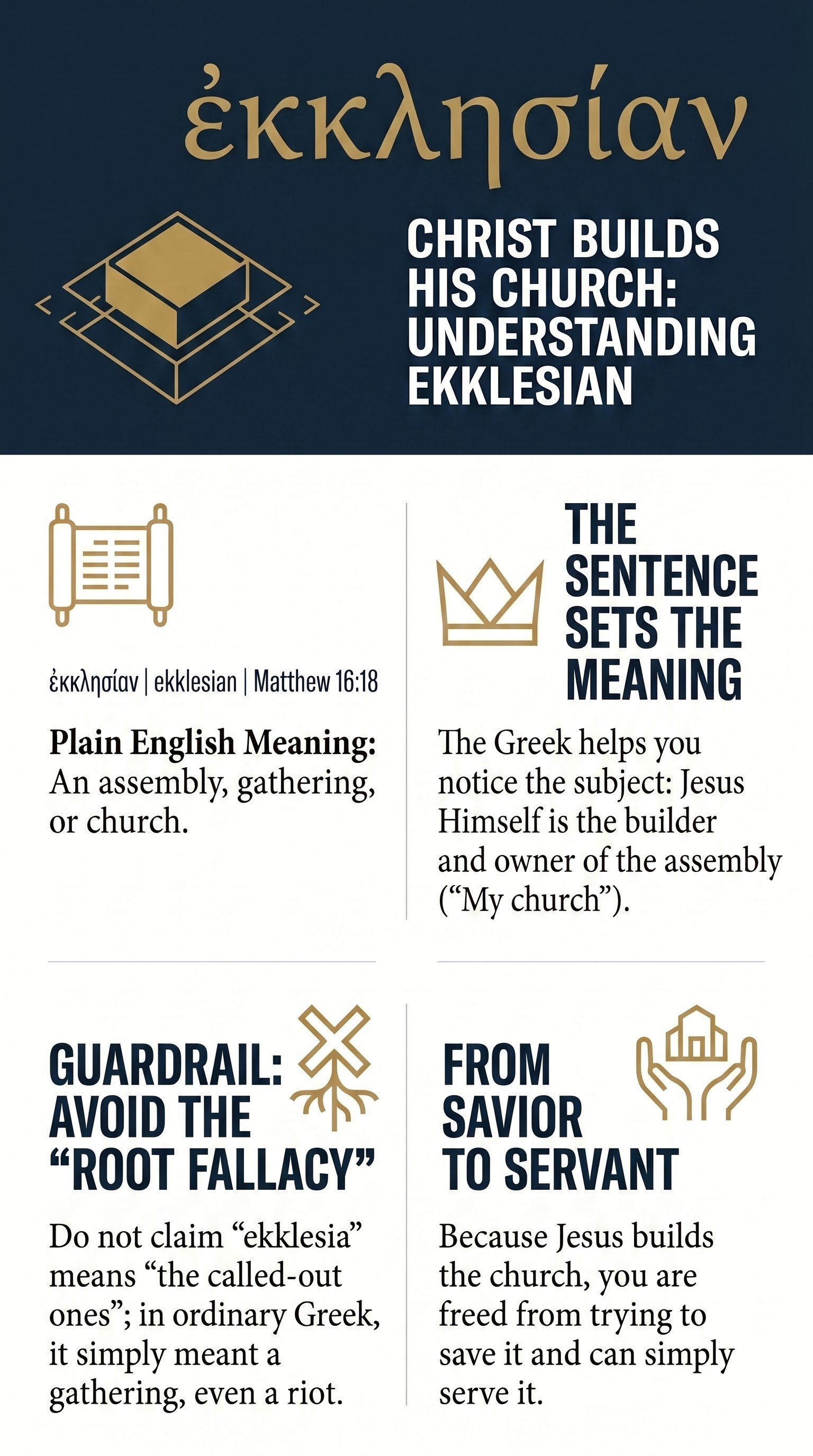
Matthew 16:18 · guardrail-checked
Ekklesian: Christ Builds His Church
ἐκκλησίαν
ekklesian · assembly / church
Jesus names the church as his own and promises that he himself will build it.
Guardrail: Do not preach only from a root-word slogan like called-out ones. The sentence matters: Christ builds his church.
Lesson Posters: One Word, One Page
Every lesson as a printable poster: the Greek word, the plain meaning, the guardrail, and the worship payoff on a single page. Print the one you’re studying this week and put it where your coffee lives.
A short quiz for every lesson: five plain-English questions on the word, the verse, the guardrail, and the payoff. Take it right after you listen, while the lesson is still warm. Pass all ten and the vocabulary of the New Testament has genuinely started living in you.
One lesson is shorter than your drive. Press play when you pull out, and let the word sit with you at every red light. By the time you park, ask yourself one question: what did this verse say about God? You'll walk in carrying something better than the morning's headlines.
The morning table
Coffee, open Bible, phone face-up only for the audio. Read the verse first, then listen, then read the verse again. It'll sound different the second time. Two minutes of silence after. This is the 6 a.m. version of going deeper, and it fits before anyone else wakes up.
The small group
Play one lesson aloud at the start of group. They're short enough that nobody checks their phone. Then ask: “What's the guardrail here, and why does it matter?” You'll get a better discussion from one careful word than from a chapter skimmed in the parking lot.
After You Listen
The lesson does its deepest work in the five minutes after the audio ends. Keep a notebook with the kit and answer these three prompts. One line each is enough:
What did this word show me about God that I might have read past before? Be specific. Name the verse, not just the feeling.
What am I careful not to claim? Writing the guardrail in your own words is how it becomes yours.
What do I want to say back to God? One honest sentence. Then say it. That's the whole point of the word, the verse, and the audio.